Snowball Analytics Alternative: 6 Tools Compared for 2026
Find the right snowball analytics alternative for 2026. We compare Sharesight, Portseido, Stock Events and more on tax reports, price and income depth.
YieldDesk8 min readPublished
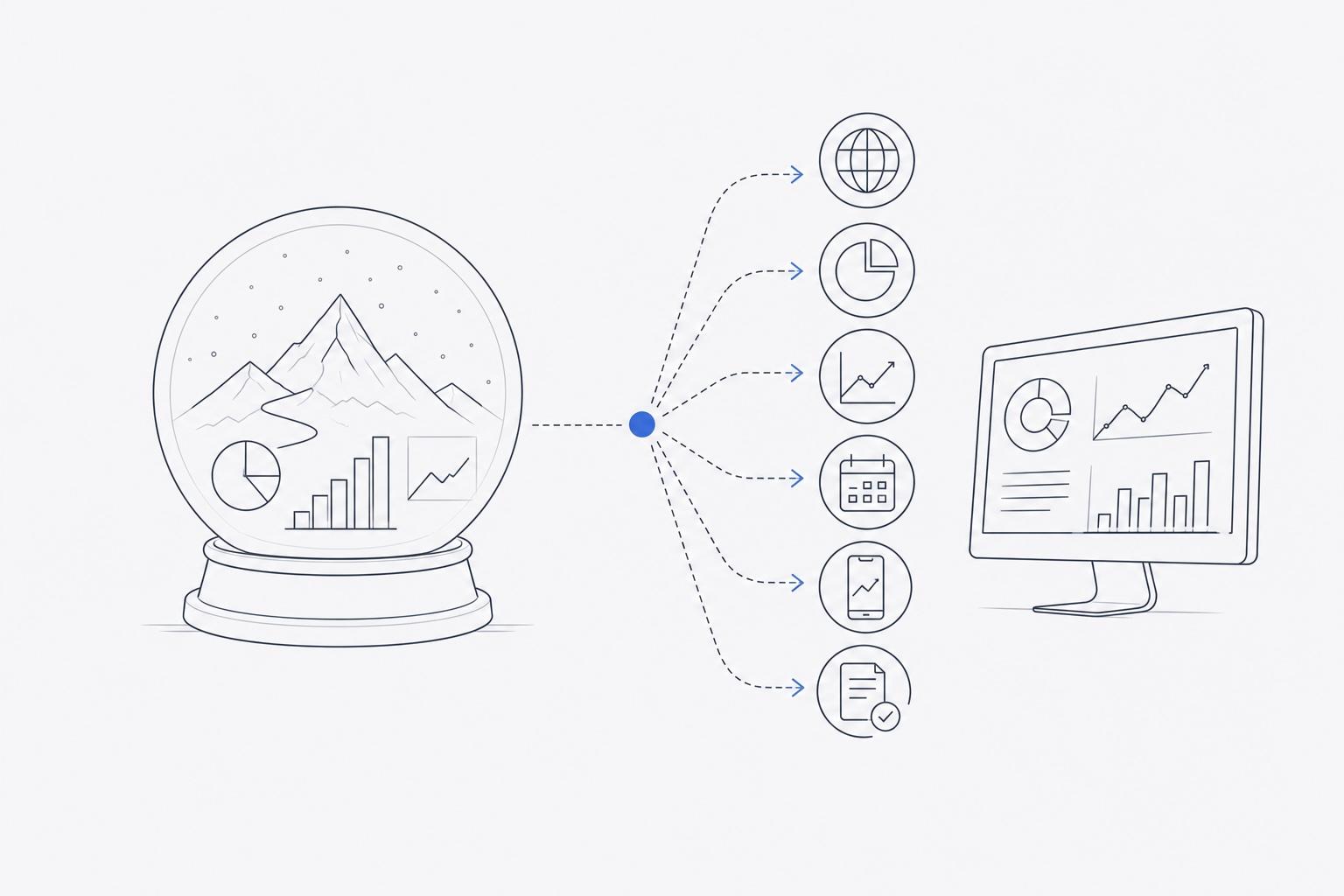
The best Snowball Analytics alternative depends on what you are missing. Sharesight suits country-specific tax reports, Portseido offers deeper performance metrics at a lower price, and Stock Events is a lightweight mobile income calendar.
Investors usually look past Snowball for one of three reasons: tax reporting, cost, or depth on specific income securities. This guide compares your options against Snowball, then gives you a short way to choose between them.
What does Snowball Analytics do well, and where does it fall short?
Snowball Analytics is a dividend-focused tracker that consolidates global holdings and adds a dividend calendar, income forecasting, and a proprietary dividend rating system. That focus on dividend analytics is its main strength.
It also has a track record. As of October 2026, Snowball held a Trustpilot rating of 4.6 across 552 user reviews, according to looniee.ca. Its maker says it syncs automatically with more than 1,000 financial institutions in 2026, a vendor-reported figure.
The gaps are specific. Snowball does not support debt or mortgage tracking, offers no country-specific tax reporting beyond basic withholding settings, and limits crypto to basic tracking. If any of those matter to you, the alternatives below are worth a look.
Snowball Analytics alternatives compared at a glance
The table sorts each tool by the gap that usually makes people leave Snowball. Competitor pricing is described only in qualitative terms.
Tool | Best for | Tax reporting | Runs on | Price tier |
|---|---|---|---|---|
Snowball Analytics | Dividend analytics and forecasting | Basic withholding settings only | Cloud | Pricing not publicly listed |
Sharesight | Country-specific tax reports | Named reports for Australia, NZ and Canada | Cloud | A paid plan, plus a free tier capped at 10 holdings |
Portseido | Performance math and benchmarking | Not a stated focus | Cloud | A paid plan, priced lower |
Stock Events | Dividend and earnings dates on mobile | Not a stated focus | Cloud | Pricing not publicly listed |
YieldDesk | Preferreds, covered-call ETFs and BDCs | Yield and tax calculators | Web | Free Starter tier, then paid plans |
Source: tool cards for each product and YieldDesk product facts, 2026. Snowball's sync reach of more than 1,000 institutions comes from vendor-reported data, and its 4.6 Trustpilot review score from looniee.ca.
Automatic sync is the other point to check. Stock Events charges a separate weekly "Connect" add-on fee for automatic broker sync. No tool here is officially sanctioned by any brokerage, so sync depends on each tool's own connections.
Sharesight: the pick for country-specific tax reports
Sharesight tracks performance across stocks, ETFs, and property, and it generates country-specific tax reports. Those reports cover Australia, New Zealand and Canada. They do not cover the US or the UK, so US investors should not assume Sharesight closes a tax-reporting gap.
The company was founded in New Zealand in 2006, according to a competitor's comparison page. Treat that as background, not as a reason to choose it.
Know the limits before you commit. The free plan caps you at 10 holdings, and that count includes closed (sold) positions. The standard dashboard has no time-weighted return (TWR), and its dividend calendar is less detailed than in dedicated trackers.
Sharesight makes sense if you file taxes in one of its three named countries and income detail is secondary.
Portseido: advanced performance metrics for less
Portseido focuses on performance math. It offers money-weighted return (MWR), time-weighted return (TWR), and trade analysis across more than 70 global exchanges, at a lower price point than the pricier tools here.
The tradeoff is emphasis. Portseido leans toward professional-style benchmarking more than simple dividend visuals. Money-weighted return reflects the timing of your own deposits and withdrawals, while time-weighted return strips those out so you can compare your picks against an index fairly. If you want to know how your portfolio performed against an index after accounting for when you made deposits, it suits you. If you mainly want a clean view of next month's dividends, it may feel heavier than you need.
If you want a free option, Portseido is not one, because it is a paid plan. Sharesight's capped free tier is the closest in this group. Portseido's appeal is value: a cheaper entry point for deeper return metrics.
Stock Events: a lightweight mobile income calendar
Stock Events is a mobile-first events feed. It tracks dividend dates, earnings releases, and annual income summaries. It does less than a full tracker, and that is the point.
Its analysis is less comprehensive than desktop-first platforms. Automatic broker sync costs extra through a separate weekly "Connect" add-on, so check that fee before assuming the app is free to run.
It fits an investor who wants to open a phone, see which holdings pay this week, and move on. Is a mobile events feed enough to track income? For a simple calendar, yes. For forecasting, tax work, or return analysis, no. A general quote page can show a payout date, but it will not roll your income into an annual summary the way this app does.
When does YieldDesk make more sense than a general tracker?
YieldDesk is a complement to a general tracker, not a replacement for one. It covers preferred stocks, preferred ETFs, covered-call ETFs and BDCs, and it scores each security daily on the quality of its income.
Beyond scoring, you can screen those securities, track holdings and watchlists, and run yield and tax calculators. It also sends alerts when filings such as call notices or dividend declarations affect a position. Data comes from SEC EDGAR, a licensed market-data feed, and FRED.
Pricing is simple. Starter is free with no card required. Plus is $14.95/month, or $149/year ($12.42/month billed yearly). Elite is $24.95/month, or $249/year ($20.75/month billed yearly). Yearly billing saves up to 44%, and Plus and Elite start with a 7-day free trial. A full refund is available within 7 days of the first charge after the trial.
If you are comparing Kubera alternatives or reading reviews of income trackers, the question is the same: does the tool understand the securities you hold? A general tracker treats a preferred like any other ticker. YieldDesk is built around the securities where call risk and payout quality drive results.
The research found no evidence of debt or liability tracking, or of self-hosted and offline modes, in any of the tools covered here. If you need a mortgage ledger or a fully offline setup, none of these deliver it.
Is Snowball Analytics safe, and what does it cost?
Snowball's pricing is not publicly listed in the research, so this guide states no price for it. Check its site for current plans.
On safety, the available evidence is thin. User satisfaction scores are not a security audit, and a broad list of broker connections tells you about connectivity, not about how data is protected. Snowball runs in the cloud. Ask the vendor how it stores credentials, whether it uses read-only access to your accounts, and what happens to your data if you close your account. Check Reddit for user reports, but verify against the vendor's own documentation.
How do you choose the best portfolio tracker for your needs?
Dividend demand is a good reason to choose carefully. U.S. corporations distributed $180.7 billion in dividends in Q3 2026, according to Capital Group. Dividend ETFs also took in nearly $80 billion in net new inflows during the first ten months of 2026, according to ETF Trends. The more income you track, the more a data error costs you.
Work through these steps:
Identify your primary tracking goal. Decide whether you need dividend forecasting, tax reports, return analysis, or a simple calendar.
Evaluate data sovereignty and location. Find out where your data lives and who can access it.
Test the AI assistant with verifiable data. If a tool offers one, ask it something you can check against your own records.
Audit the input method against required outputs. Confirm that automatic sync or manual import can produce the reports you actually need.
Confirm data exportability. Make sure you can take your data with you if you leave.
If your holdings lean toward preferreds, covered-call ETFs or BDCs, read the income portfolio tracking guide before settling on a general tracker.
Prices and plan limits verified as of November 2026.
FAQs
How much does Snowball Analytics cost?
Snowball's pricing is not publicly listed in the research behind this comparison, so no figure is stated here. Check Snowball's own site for current plans, and compare them against how many portfolios and holdings you need to track before you decide.
Is there anything better than Yahoo Finance for tracking investments?
For dividend tracking, yes. Stock Events adds a dividend and earnings calendar with annual income summaries, and Snowball adds income forecasting. Yahoo Finance shows quotes and basic data, but a dedicated tracker rolls payments into a forecast.
What is the best app to track all my investments?
It depends on your goal. Sharesight suits country-specific tax reports, Portseido suits performance metrics, Snowball suits dividend analytics, and Stock Events suits a simple mobile calendar. Pick based on the gap you need filled.
Can I track debt or mortgages in a portfolio tracker?
Not in the tools covered here. Snowball does not support debt or mortgage tracking, and the research found no evidence of debt or liability tracking in the others. Use a separate spreadsheet or net worth tool for liabilities.
Are there self-hosted or offline portfolio trackers for privacy?
The research found no self-hosted or offline options among these tools. All four run in the cloud. If privacy is your priority, look for a tool that lets you export your data and delete your account.
Does Snowball Analytics support US and UK tax reporting?
Not in a country-specific way. Snowball offers basic withholding settings but no country-specific tax reporting. Sharesight's named tax reports cover Australia, New Zealand and Canada, not the US or UK.
Conclusion
No single tool beats Snowball Analytics for everyone. Sharesight fits tax reporting in its named countries, Portseido fits return analysis at a lower price, and Stock Events fits a simple mobile calendar.
Start by naming the one gap that made you look elsewhere. Then test your top pick with a few real holdings, and confirm you can export your data before you move everything over.
Library articles are general information about securities and markets. They are not advice on any security or on whether to buy or sell it. Disclosures
The preferred stocks list shows every public record with its price, coupon, call date and yield.
The preferred stocks listRelated articles


One issue, every Sunday.
Eight blocks of data, one chart, no commentary. Rates, the week's movers, listings and filings across preferred stocks, BDCs and covered-call ETFs.
Free · Sundays · unsubscribe at any time · addresses are never shared