How can I get notified automatically about SEC filings that affect the preferred stocks I own?
Set up SEC filing alerts for preferred stocks with free EDGAR RSS feeds or paid tools, and learn which 8-K, 10-Q, and 424B filings matter to holders.
YieldDesk8 min readPublished
Step 1: List your holdings and find each issuer's CIK
Step 2: Know which filings matter to preferred holders
Step 3: Set up free alerts
Step 4: Set up YieldDesk alerts
Free versus paid: a quick comparison
Step 5: What to do when an alert arrives
Frequently asked questions
Get started
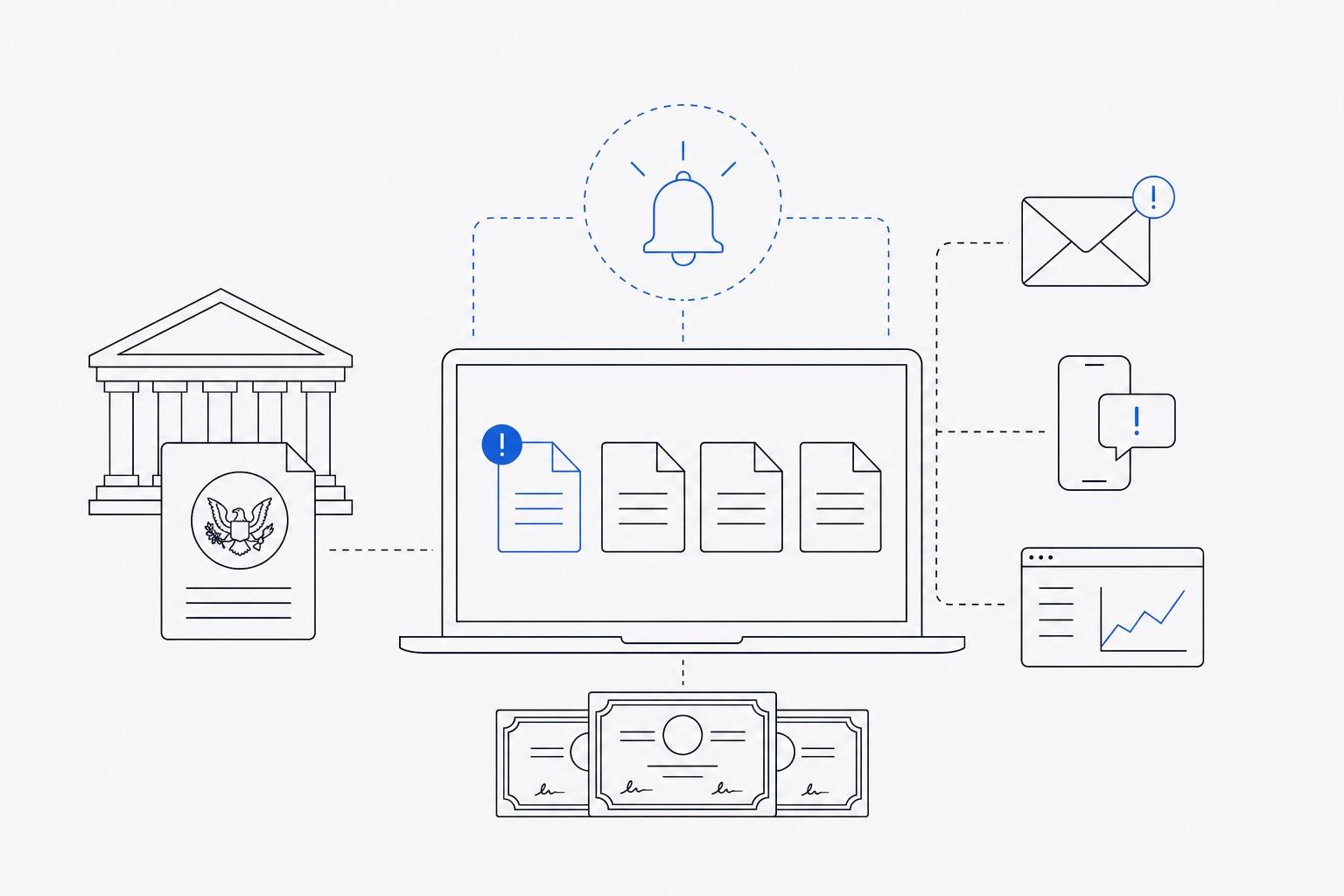
Set up automatic alerts by company and filing type, so a notice reaches you when an issuer files a Form 8-K, 10-Q or prospectus supplement. Free options exist through SEC EDGAR RSS feeds and third-party email alert services such as KFilings and CapEdge. YieldDesk, the publisher of this guide, sends alerts within 24 hours of an SEC filing, which is fast but not instant.
This article is educational and is not investment advice. The steps below cover SEC filing alerts for preferred stocks, from the free do-it-yourself route to a preferred-specific tool.
Step 1: List your holdings and find each issuer's CIK
Every company that files with the SEC has a Central Index Key, or CIK, a numeric identifier used by the SEC's EDGAR database. Alerts are set by issuer, so you need to identify the right company before the ticker is of any use.
The issuer is not always who you expect. A bank's Series S preferred may be issued by a holding company whose common stock trades under a different ticker. A REIT preferred usually comes from the REIT itself, though some trade through an operating partnership. A preferred ETF holds many issuers, so its own filings (N-CSR, N-PORT) matter less than the filings of the companies inside it.
To find the CIK:
Write down each preferred ticker you own.
Open the security's prospectus or your broker's description page and note the legal name of the issuer.
Search that name in EDGAR company search and copy the CIK from the result.
Check the filing list to confirm it shows recent 8-Ks and 10-Qs. If it does not, you may have a subsidiary or a similarly named entity.
Keep the list in a spreadsheet with columns for ticker, issuer, CIK and the call date if one exists. You will reuse it in every step below.
Step 2: Know which filings matter to preferred holders
An issuer files dozens of documents a year. Preferred holders need to watch a short list.
Filing | What it tells a preferred holder |
|---|---|
Form 8-K | Redemption or call notices, dividend declarations or suspensions, rating or credit events, capital actions, changes to the terms of a security |
Form 10-Q and 10-K | Dividend coverage, capital ratios, liquidity, risk factors and any language about deferring distributions |
Prospectus supplement (424B) | New preferred or debt issuance, which can signal that the issuer plans to refinance an older, higher-coupon series |
Form 4 | Insider purchases and sales of the issuer's securities |
The 8-K is the most time-sensitive. Under SEC rules, an issuer files it within four business days of a triggering event. Redemption notices often arrive this way, and so do dividend suspensions. An 8-K does not always mean bad news. Many are routine, such as an earnings release, a debt offering or a board change. The skill is reading the item number and the first paragraph quickly.
The 10-Q and 10-K are slower but show whether the dividend is covered. For a bank preferred, look at capital ratios and the regulator's stress test notes. For a REIT preferred, compare funds from operations with total preferred dividends.
A 424B filing deserves attention because new issuance is often how a company pays for a redemption. When a bank sells a new preferred at a lower coupon, it frequently calls an older, higher-coupon series soon after. Our guide on how to tell if a preferred stock will be called or redeemed [blocked] explains the call mechanics in more depth.
Step 3: Set up free alerts
Two free routes work well. Both need some manual setup, and neither understands preferred stocks specifically.
EDGAR RSS feeds. EDGAR publishes an RSS feed for filings by company. In EDGAR company search, enter the CIK, filter by form type (8-K, for example) and use the Atom or RSS link on the results page. Paste that link into any feed reader. You need one feed per issuer and per form type, so ten holdings and two form types means twenty feeds.
Third-party email alerts. Services such as KFilings and CapEdge let you enter a company and receive an email when a filing appears. Setup is faster than building feeds, and the emails land where you already look. Features, limits and any fees vary by service and change over time, so check each provider's current terms before you rely on one.
Both approaches share a limitation: they tell you a filing exists, not whether it affects your preferred. An 8-K from a bank holding company might concern a mortgage servicing sale and have nothing to do with your preferred series. You still read every one.
Step 4: Set up YieldDesk alerts
YieldDesk screens, scores and monitors more than 950 preferred stocks, preferred ETFs, covered-call ETFs and BDCs every trading day. Alerts tie into that coverage, so they are written for preferred holders rather than general filers.
You can set alerts for:
Price levels, such as a drop below a level you chose
Call windows, when a preferred enters the period in which the issuer can redeem it
Distributions declared, so you see a dividend declaration or change as it is reported
Insider filings, which cover Form 4 activity at the issuer
Par crossings, when a preferred moves above or below its $25 par value (or whatever par applies). This level matters because call risk rises as the price climbs above par
Alerts based on SEC filings are sent within 24 hours of the filing. That is not instant. If you need to react within minutes of an 8-K, a feed reader pointed at EDGAR will usually be faster. YieldDesk quotes are delayed by 15 minutes, so price alerts are not real-time either. The methodology page [blocked] describes how the scoring and data work.
On cost: the Starter plan is free and needs no card. Plus and Elite plans include a 7-day free trial that requires a card. See yielddesk.co for current plan details.
Free versus paid: a quick comparison
Free DIY (EDGAR RSS) | Third-party email alerts | YieldDesk | |
|---|---|---|---|
Setup | Manual: find CIKs, build one feed per issuer and form type | Enter companies and pick filing types | Add holdings, choose alert types |
Speed | Fastest; follows EDGAR closely | Varies by service | Within 24 hours of an SEC filing |
Preferred-specific logic | None | None | Call windows, par crossings, distributions |
Price alerts | No | Generally no | Yes, with 15-minute delayed quotes |
Main limit | Time spent building and reading raw filings | You still interpret each filing | Not instant; filing alerts can lag by up to a day |
Cost | Free | Check each provider | Free Starter plan; paid plans have a 7-day trial with a card |
For a large portfolio, a reasonable setup combines them. Use an RSS feed or email alert for your largest positions, where speed matters, and a preferred-focused tool for the call and par logic across everything else.
Step 5: What to do when an alert arrives
An alert is a prompt to read, not a signal to trade. A short routine keeps you from reacting to the headline.
Open the filing itself. Read the item number on the 8-K (for example, Item 8.01 for other events) and the first paragraph. Skip the summaries until you have seen the source.
Confirm the security. Issuers often have several preferred series. Check that the filing names yours by series letter or CUSIP.
Confirm the call date and price. If it is a redemption notice, find the redemption date, the redemption price (usually par plus accrued dividends) and any conditions, such as regulatory approval.
Check the yield to call. If you paid above par, a call at par produces a loss on principal. The Yield to Call tool [blocked] shows what your return looks like if the issuer redeems on the stated date. Yield to call is the annualized return you earn if you hold to the call date, counting dividends received and the difference between your purchase price and the call price.
Decide what the filing changes. A call removes future dividends. A dividend suspension on a cumulative preferred means the amount is owed but unpaid. A noncumulative preferred does not owe missed dividends. Know which kind you hold before you act.
Write down what you found and the date. A short log makes it easier to see which issuers file often and which stay quiet.
Frequently asked questions
Are SEC filing alerts instant? Not through YieldDesk, which sends filing alerts within 24 hours of the SEC filing. EDGAR RSS feeds update closer to the time of filing, and some email services are faster than a daily cycle. No alert system removes the need to read the filing yourself.
Which filing signals that a preferred stock will be called? Usually a Form 8-K, often under an item covering the redemption or a material event, or a notice of redemption attached as an exhibit. A 424B for a new preferred issue can be an earlier hint that the issuer is refinancing. Neither is a guarantee. Only the issuer's notice confirms a call.
Does an 8-K always mean bad news? No. Most 8-Ks are routine: earnings releases, debt offerings, executive changes and annual meeting results. The ones that matter to a preferred holder concern redemptions, dividend changes, rating actions and capital actions. Read the item number first.
Do I need to pay for SEC filing alerts? No. EDGAR RSS feeds are free, and several third-party services offer free tiers. The YieldDesk Starter plan is also free with no card. Paid options add convenience and preferred-specific alerts, so weigh them against the time you would spend building your own system.
Get started
You can have a basic system running in an hour: list your holdings, find the CIKs, subscribe to 8-K feeds for the issuers you hold, and read each filing when it lands. If you want call windows, par crossings and distribution alerts without building feeds, create a free account at yielddesk.co.
YieldDesk is the publisher of this article. The content is educational and is not investment advice. Preferred stock dividends can be reduced, suspended or deferred, and issuers may redeem securities when the terms allow.
Library articles are general information about securities and markets. They are not advice on any security or on whether to buy or sell it. Disclosures
The preferred stocks list shows every public record with its price, coupon, call date and yield.
The preferred stocks listRelated articles


One issue, every Sunday.
Eight blocks of data, one chart, no commentary. Rates, the week's movers, listings and filings across preferred stocks, BDCs and covered-call ETFs.
Free · Sundays · unsubscribe at any time · addresses are never shared